

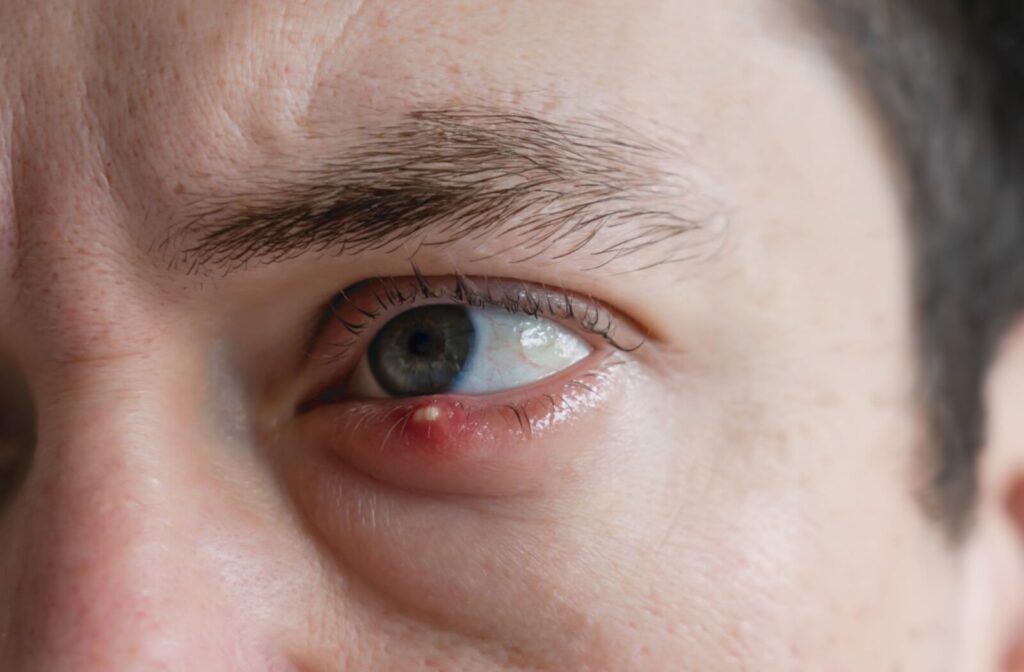
You wake up one morning and feel a small, tender bump on your eyelid. It’s red, a little sore, and looks a lot like a pimple. This unwelcome visitor is likely a stye, and at iSight Optometry, the team knows you might wonder what brought it on, especially during a busy or difficult week.
You may have noticed styes seem to appear when you’re under pressure, but the connection isn’t direct. Stress does not cause a stye, but it can weaken your body’s defences, making you more susceptible to the bacterial infection that can cause a stye. The team is focused on helping you understand these connections as part of your comprehensive eye care.
What Is an Eye Stye?
A stye is a small, tender bump that appears on the edge of your eyelid. It forms when an oil gland becomes clogged and infected with bacteria. Though it can be uncomfortable, it’s a very common eye condition that often resolves with simple care.
Common Signs of a Stye
- A red, swollen bump on the eyelid
- Tenderness or pain
- Watery eyes
- A gritty feeling, like something is in your eye
- Crusting along the eyelid margin
Styes vs. Other Bumps
You might mistake a stye for a chalazion, which is also caused by a blocked oil gland. Typically, however, a chalazion is not caused by a bacterial infection. As a result, a chalazion is often less painful than a stye.
The Link Between Stress and Styes
Long periods of stress can take a toll on your body, including your immune system. While stress isn’t the direct cause, it can create an environment where the bacteria responsible for styes can thrive more easily.
How Stress Affects Your Immune System
When you feel stressed, your body can release hormones that may suppress your immune response. A less effective immune system has a harder time fighting off infections—including the bacterial ones that can contribute to a stye.
Sleep, Stress and Your Eyes
Stress often disrupts sleep patterns. A lack of restorative sleep can further weaken your body’s defences. When you’re tired, you may also be more likely to rub your eyes with unwashed hands, which can transfer bacteria to your eyelids.

Other Factors That Can Lead to Styes
Beyond a weakened immune system, several other factors can increase your chances of developing a stye. Many of these relate to your daily habits and hygiene routines.
Daily Habits That Raise Your Risk
- Touching or rubbing your eyes frequently, especially with unwashed hands
- Using towels or pillowcases that aren’t clean
- Having a skin condition like rosacea
- Experiencing chronic blepharitis, which is a condition involving eyelid inflammation
Makeup and Contact Lens Care
Your routine with makeup and contact lenses can also affect your eye health. Following proper contact lens safety tips and makeup hygiene is key to avoiding blocked glands and infections. These hygiene tips include:
- Removing all makeup before going to sleep
- Changing out makeup every 3–6 months, depending on the product
- Cleaning your lenses properly
- Never wearing disposable lenses longer than recommended
A professional contact lens exam can help you figure out the right products and care routine for your eyes.
What You Can Do at Home for a Stye
Most styes begin to improve within a week with simple home care. Your goal is to ease discomfort and help the stye drain on its own. Remember to always wash your hands before and after touching your eyes.
Soothe Your Eyelid
A warm compress can provide some relief. Gently hold a clean, warm, damp cloth against your closed eyelid for 10–15 minutes. You can repeat this 3 to 4 times throughout the day to encourage the stye to drain.
What to Avoid
It’s important that you never squeeze or try to pop a stye, as this can spread the infection and make it worse. You should also avoid eye makeup and contact lenses until your eye has fully healed.
When to See an Eye Doctor
While home treatment is often enough, some situations call for professional care. An optometrist can examine your eyes, confirm the diagnosis, and suggest appropriate steps during an eye exam.
Signs You Need Professional Care
Make an appointment with your optometrist if you notice that:
- The stye isn’t starting to improve after 48 hours of home care
- The swelling or redness spreads to your cheek or other parts of your face
- Your vision is affected
- You seem to get styes frequently
If redness and swelling spread, it may require emergency eye care to prevent complications.
How Your Optometrist Can Help
If a stye is particularly stubborn or severe, a visit to an eye doctor is a good idea. The team can provide personalized attention and may recommend an antibiotic cream or ointment to help clear the infection. In some cases, the optometrist may need to drain the stye in the office to help it heal.
Schedule Your Appointment
If you’re dealing with a persistent stye or have concerns about your eye health, the team at iSight Optometry is here to help. Schedule a visit to receive 1-on-1 optical solutions and attentive care for your family’s vision needs.